Your closet, made simple.
Designing wardrobe setup for people with different collections, habits and levels of patience.
- My role
- Project design team lead
- Team
- Three designers, including me
- Product
- AI styling for men and women
- Focus
- Scope, user journeys and closet setup
The wardrobe was part of the research.
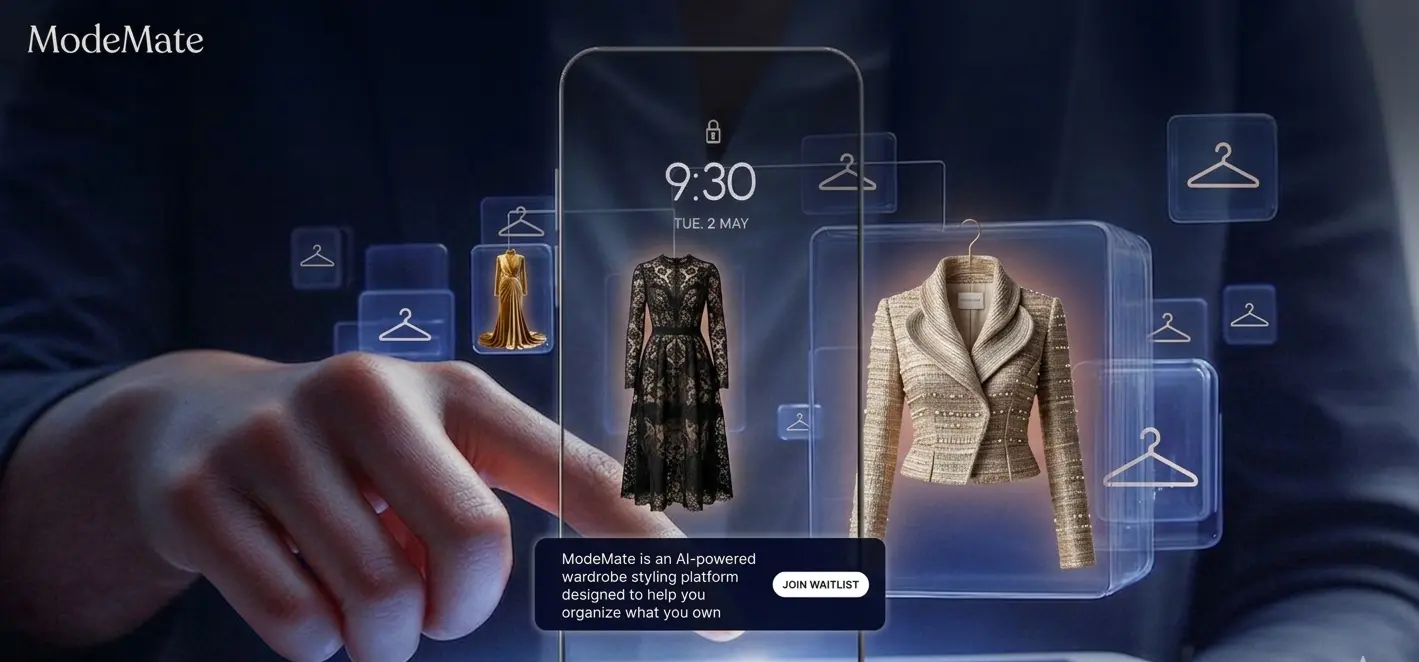
ModeMate helps people organise their clothing and explore outfit recommendations. While mapping the user journey, I recognised that potential users would extend beyond our immediate environment. Designing around one familiar type of wardrobe would limit the experience.
I conducted interviews to explore interest in the product and understand the kinds of closets people owned. This surfaced an important setup challenge: photographing every garment could become cumbersome for someone with a large collection.
Your wardrobe should not become homework.
I designed another way to build the digital closet. Users could start with clothing categories and default images, then add more detail where their items needed it.
Choose a category
Start with clothing types such as tops, activewear or jackets.
See the default
Each category has an image showing what the item looks like.
Make it yours
Add the default, or describe your garment with a prompt and visualise it.
Add distinct details
Photograph pieces with a special design that need a closer match.
Support different closet sizes
The category route gave users an alternative to starting with individual photos for every item. The intended benefit was a more manageable starting point for a large wardrobe.
Help people visualise their clothing
I researched clothing categories across seasons and developed a branded mannequin concept to help people visualise garments and outfit combinations.
Keep room for specificity
Default images offered a starting point, while prompts and photographs supported items that needed a more individual description.
Inside the digital closet.
These published screens show the home, closet, upload options and garment details. Select any screen for a closer look.
From a brief to a shared direction.
I met with the product owner to understand the scope, then worked with the design team on background research, potential audiences, user journeys, core features and scope boundaries.
I assigned features across the three person team, reviewed the work and explored edge cases with the designers. This kept the project grounded in a shared direction as the features moved through delivery.
See the pieces come together.
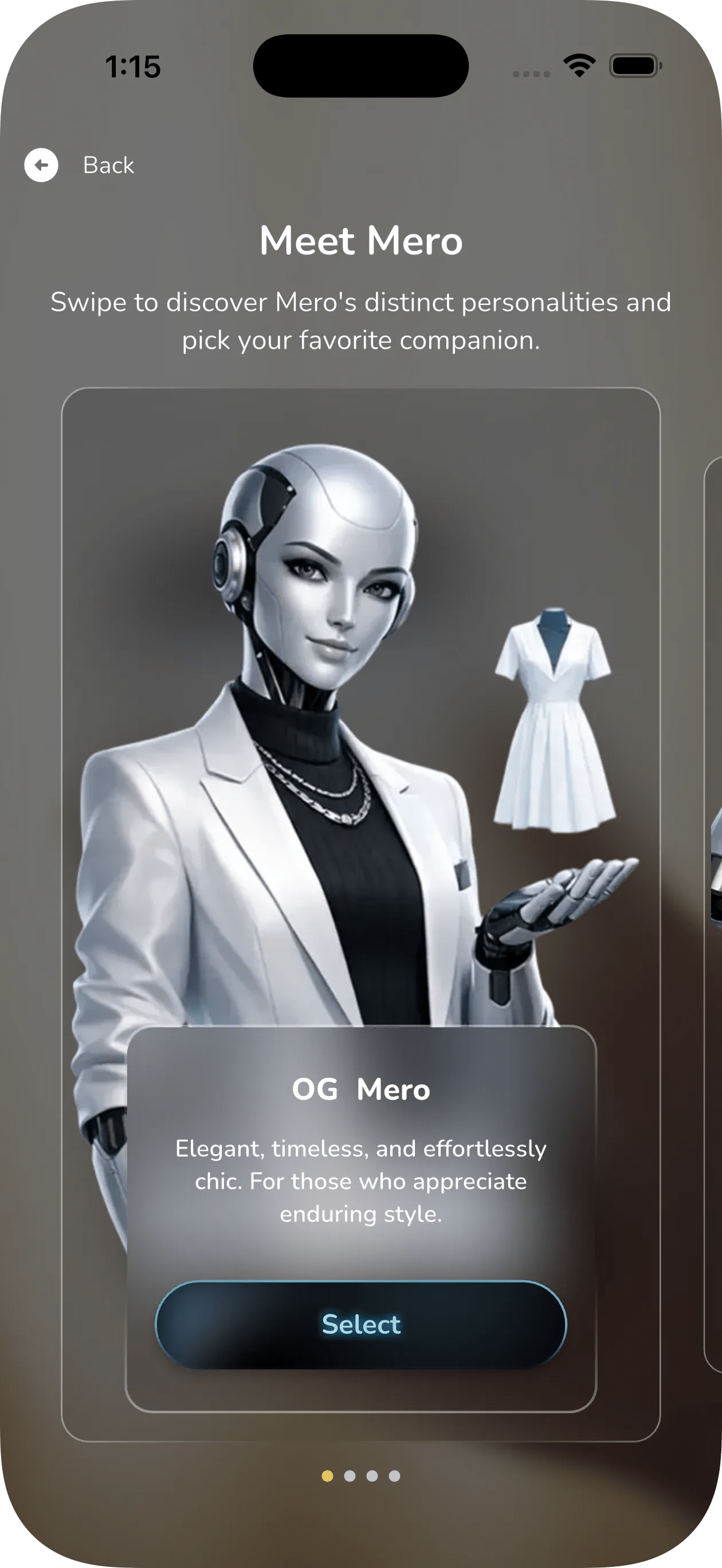
The wider experience lets users describe an occasion, choose closet items and explore outfits on a mannequin.
Design for the collection people actually have.
The strongest decision came from looking beyond the most obvious user journey. Closet size changed the effort required to get started, and the setup flow needed to respond to that difference.